








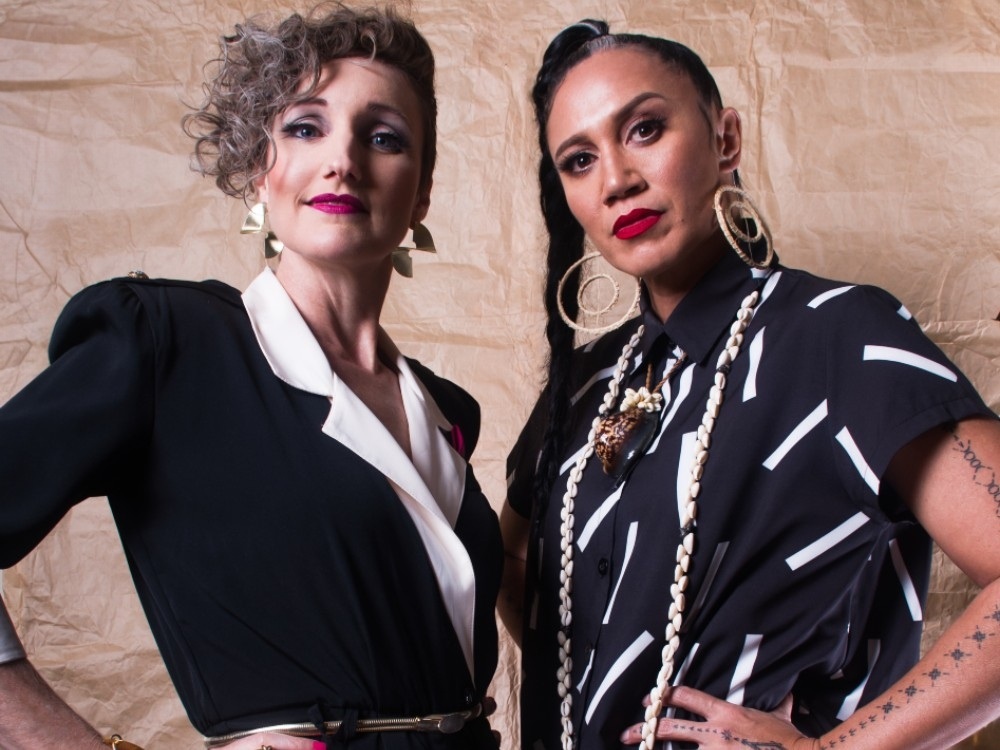
Lisa Fa’alafi and Leah Shelton, the co-creators Dangerous Goods (part of Auckland Live Cabaret Festival), discuss the fire, fury and feminism at the heart of their work.
When Dangerous Goods storms into The Civic this July, audiences can expect fire, aerials, burlesque, drag, powerhouse vocals and a very clear warning: this is not cabaret that politely asks to be included.
Created by Australian performance collective Polytoxic, the show has been described as “high-voltage cabaret for a brave new world”, an all-femme explosion of spectacle, satire and rebellion. It arrives in Tāmaki Makaurau as part of the Auckland Live Cabaret Festival, bringing with it political conversations already pulsing through Aotearoa around indigeneity, Pacific identity, gender, colonial power and who gets to take up space.
For Polytoxic’s Lisa Fa’alafi, the company’s origins were born from necessity.
“As a Samoan woman coming out of drama school in Magandjin, Brisbane, in the late 1990s, I couldn’t see any real pathways into the industry for myself,” she tells YOUR EX. “There were no visible Pacific artists around me, no clear entry points, no sense that the space was built for us. So starting our own company felt like a no-brainer.”
In those early days, she says, there was no master plan.
“We didn’t really know what we were doing, but we knew we wanted to collaborate and make bold, unapologetic work that sat outside traditional boundaries. Now, 25 years later, Leah and I continue this legacy and have evolved even more now that we are fierce perimenopausal women!”
Alongside Fa’alafi, co-creator Leah Shelton has helped shape Polytoxic into a company known for work that begins with entertainment and ends somewhere closer to an uprising, with Dangerous Goods distilling that approach into one hot, unruly package.
“It’s been mixed,” Shelton says of how welcoming Australian and international scenes have been for queer artists, women and people of colour. “There are incredible pockets of support and progress, but also long-standing structural barriers. Access, representation and decision-making power are still uneven.”
The spark for Dangerous Goods reportedly began with the stereotype of construction-worker catcalls. From there, the show began asking a bigger question: what is dangerous?
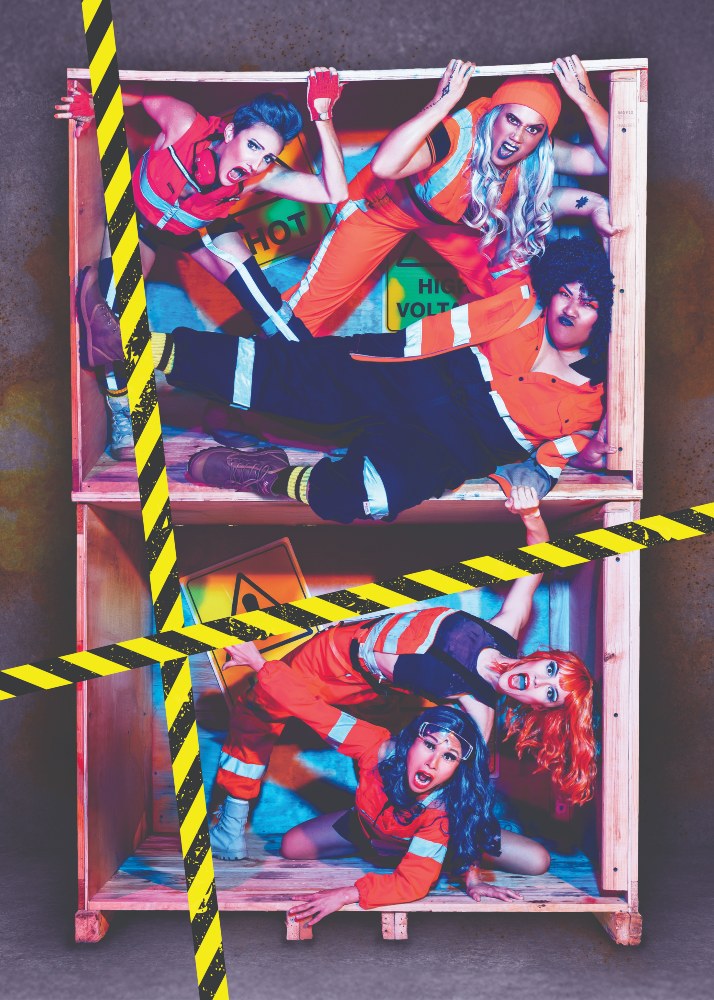
“In a world where polarising views are becoming the norm, where even speaking out against crimes against humanity can be framed as a crime, we began to ask ourselves: are we the dangerous ones?” asks Fa’alafi.
“The worksite emerged as a central metaphor, a place loaded with gendered power, labour and visibility,” Fa’alafi explains. “We took the idea of the catcall and flipped it. What is usually directed at women’s bodies was met with force and resistance. Hi-vis became more than costume; it was a way of making invisible labour, particularly the labour of women and artists of colour, impossible to ignore.”
From there, the idea of “The Work” became the spine of the show.
“The work we do to survive. The work it takes to hold our ground. The work required to dismantle oppressive systems. And ultimately, the collective work needed to imagine and build something different.”
For all its political charge, Dangerous Goods is still built as a wildly entertaining night out. Auckland audiences can expect circus, aerials, burlesque, vocals, comedy and bodies pushed to extremes.
“We use spectacle and satire to open the door,” Shelton says. “Cabaret allows us to package inherently political ideas in a way that’s accessible and entertaining. Audiences come in for the spectacle, the skill, the humour, the energy, and once they’re with us, we can take them somewhere deeper.”
The aim is not to lecture. It is to seduce, unsettle and ignite.
“It’s about creating an experience that is thrilling, thought-provoking and boundary-pushing without ever losing the sense of fun.”
Shelton describes this as an intersectional feminist cabaret. “It means acknowledging that people experience the world differently depending on race, gender, sexuality, culture and class, and making work that reflects that complexity,” she says. “And for me, as a white woman with a colonial and settler background, it’s about allyship, and turning allyship from words into action, which sometimes means having uncomfortable conversations, but it also means eating, laughing, making art, and being loose together.”
For Fa’alafi, Dangerous Goods continues a long artistic conversation around Pacific identity, cultural fetishisation and the colonial gaze.
“I’ve spent many years as a physical performer, but right now there’s an urgency to articulate things more directly, through text, through song, through a fierce perimenopausal, no-fucks-given, big bad Aunty voice.”
At its heart, she says, the work is about liberation.
“I’m interested in dismantling colonial shame, standing strong in my culture, and challenging the preconceived notions of what we are allowed to be. Making work that pushes towards liberation will always be my driving force as an artist.”
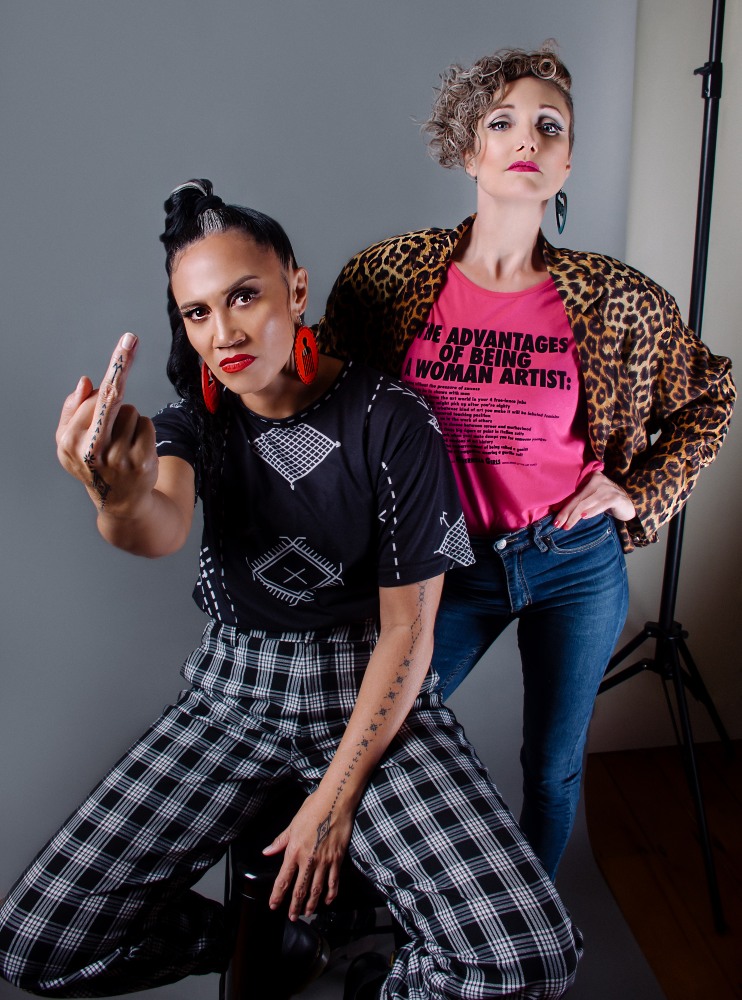
Fa’alafi tells us that bringing the show to Aotearoa feels like joining a conversation already in motion.
“There are deep, ongoing dialogues in Aotearoa around these themes, and we’re bringing our own perspectives into that space,” she says. “There are differences in experience, but also strong resonances across diasporas. It’s about connection, exchange and adding another layer to the conversation.”
And for those simply coming along expecting a wild night of cabaret?
“If people leave entertained and thinking differently about power, bodies and the world around them,” Fa’alafi says, “then we’ve done our job.”