









Hungary’s new government is moving to dismantle an Orbán-era adoption rule that effectively shut same-sex couples out of the system, marking another major shift in LGBTQ+ policy since Viktor Orbán lost power earlier this year.
Prime Minister Péter Magyar has confirmed that his government will change the current rules governing adoption by single people and same-sex couples.
The system was introduced in 2020 under Orbán’s Fidesz government and restricted adoption primarily to married couples.
Because same-sex marriage is not legal in Hungary, gay and lesbian couples could only pursue adoption if one partner applied as a single person — and even then required special approval from the minister responsible for family policy.
In practice, rights groups said the system amounted to an effective ban.
Magyar now says that decision-making power should be removed from politicians.
“We can state unequivocally that we will change this system,” he said.
He argued that adoption decisions should instead be made by professionals capable of determining what arrangement is in the best interests of an individual child.
A Major Break With The Orbán Years
The announcement marks a sharp departure from the policies pursued during Orbán’s 16 years in power.
His government repeatedly tightened restrictions affecting LGBTQ+ people, including ending legal gender recognition, restricting LGBTQ+ content accessible to minors and defining family structures in explicitly heterosexual terms.
The 2020 adoption changes were one of the clearest examples.
Before those rules came into force, a person in a same-sex relationship could apply to adopt as a single parent.
The new system did not explicitly say “gay couples cannot adopt”.
Instead, it created a political approval process that effectively made adoption by same-sex couples far more difficult.
Magyar’s government is now signalling that this structure will be dismantled.
Adoption Equality Is Not Here Yet
The announcement is significant, but it does not yet mean same-sex couples in Hungary have full and equal adoption rights.
The government has said the system will change, but the exact wording of the new law and how it will operate in practice still matter.
Same-sex marriage remains illegal in Hungary, although registered partnerships are recognised.
That means even after reform, adoption may still operate differently for same-sex couples unless the new legislation provides genuinely equal access.
The key change Magyar has promised is that decisions will no longer rest with a government minister.
That would remove one of the most significant political barriers created under Orbán.
Part Of A Wider LGBTQ+ Reset
The adoption announcement comes as Magyar’s government also moves to undo other anti-LGBTQ+ measures.
In September, the government submitted legislation to remove provisions from Hungary’s so-called child protection law that had restricted LGBTQ+ representation and discussion around homosexuality and gender transition.
Those rules had been heavily criticised by human-rights organisations and European institutions.
In April, the European Court of Justice ruled that Hungary’s restrictions violated EU law and contributed to the stigmatisation and marginalisation of LGBTQ+ people.
Magyar has made rebuilding Hungary’s relationship with the European Union a central priority since taking office.
His LGBTQ+ reforms therefore carry both human-rights and political significance.
A Shift For LGBTQ+ Families
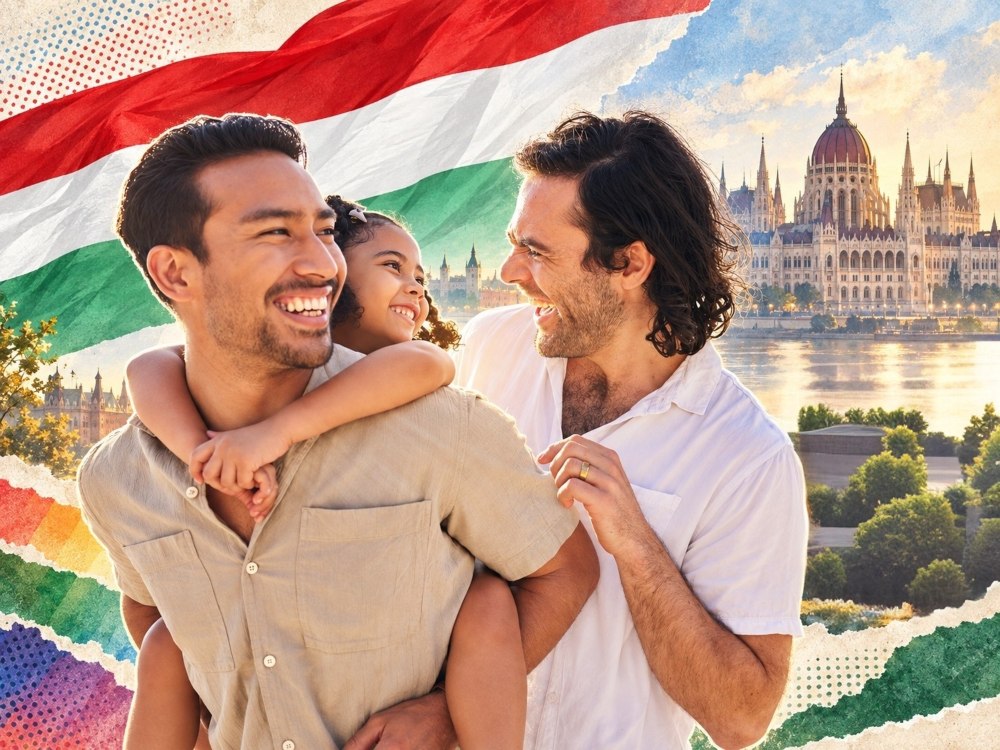
For queer families in Hungary, the adoption announcement represents one of the clearest departures yet from the Orbán era.
It does not resolve every inequality.
Marriage equality remains off the table, legal recognition for trans people remains restricted and the practical details of adoption reform still need to be written into law.
But removing political control from adoption decisions could reopen a path that had been effectively closed to gay and lesbian couples for nearly six years.
After years of policy moving in the opposite direction, that shift is substantial.