








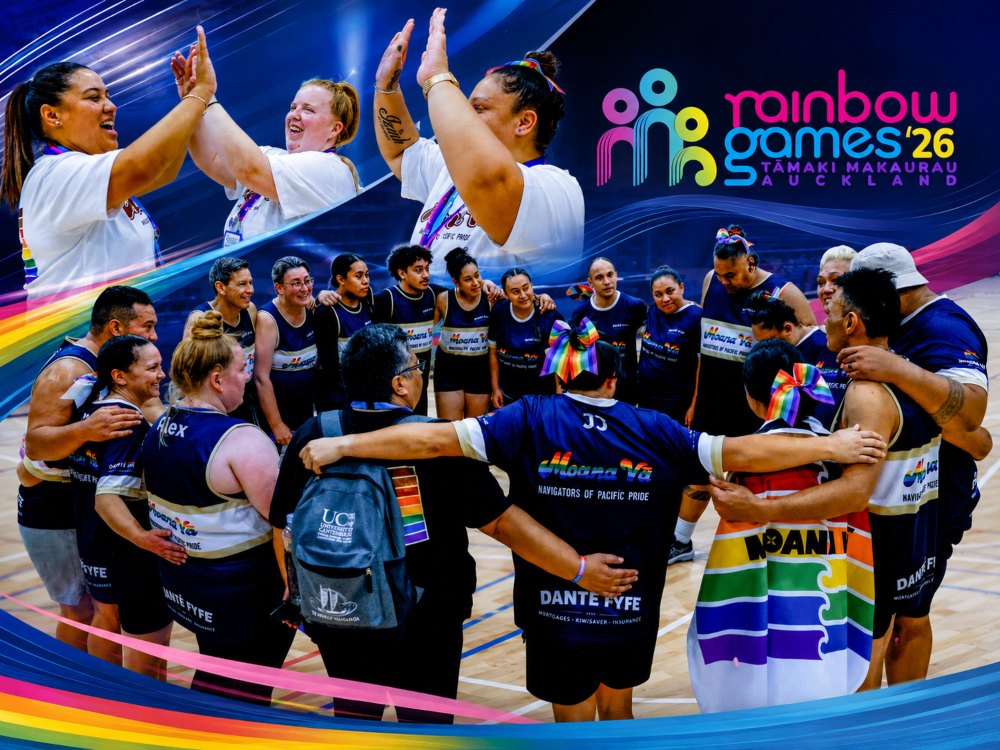
As Moana Vā prepares to deliver netball at Rainbow Games 2026, its team promises Pacific leadership, family-centred inclusion and, most importantly, “vibes!”
When Lana Shields stepped onto the netball court at the last Rainbow Games, 43 years had passed since she had played the sport.
Like many people returning after a long absence, she had doubts. Would she remember the rules? Would she embarrass herself? Could she keep up?
“But I had a go, and absolutely loved it,” she says.
As General Manager of Moana Vā, the organisation delivering netball at Rainbow Games 2026, Shields has a simple message for anyone considering registering but worrying they are too old, too inexperienced, not athletic enough or missing a team.
“Come anyway!”
For Shields, community sport has always represented far more than competition. It is where friendships form, confidence grows and communities gather. Netball, in particular, has long held a special place within Pacific families, making Moana Vā’s partnership with Rainbow Games feel like a natural extension of its work.
Moana Vā, meaning Navigators of Pacific Pride, was founded in Ōtautahi Christchurch to support Pacific Rainbow+ and MVPFAFF+ people, alongside their families, communities and allies.
Shields says the organisation was created because Pacific Rainbow+ people were too often forced to choose between different parts of themselves.
“They could find Rainbow spaces that didn’t always understand Pacific cultures, or Pacific spaces where they didn’t always feel safe being their authentic selves,” she explains.
“What was missing was a space where nobody had to leave part of themselves at the door.”
Moana Vā seeks to bridge that divide by creating culturally safe, family-centred spaces in which people are supported to belong exactly as they are. Through mentoring, advocacy, wellbeing initiatives, talanoa and practical support, the organisation works to reduce isolation and strengthen the relationships surrounding Pacific Rainbow+ people.
Its approach recognises that, within Pacific cultures, identity and wellbeing extend far beyond the individual.
“Our wellbeing is deeply connected to our family, our aiga, our churches, our villages and our communities,” Shields says. “When one person is struggling, the whole family often feels it. Likewise, when a family grows in understanding and acceptance, everyone benefits.”
Rather than seeing families as something Rainbow+ people must distance themselves from, Moana Vā invites them into the conversation.
“We see them as part of the solution,” Shields says.
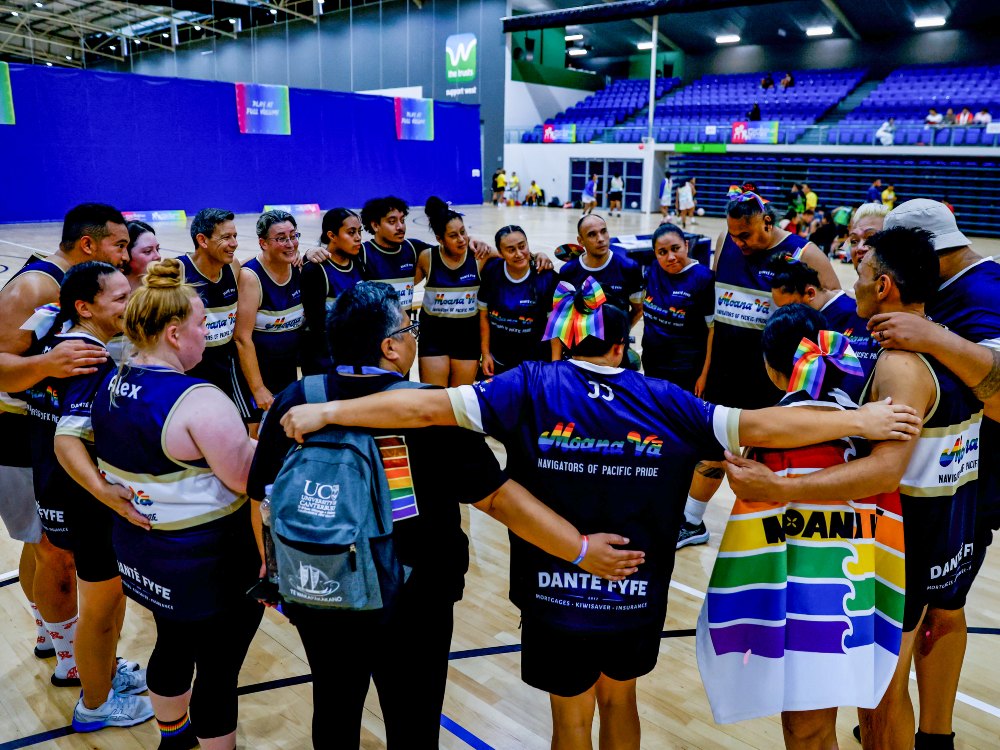
“Many parents simply haven’t had safe opportunities to ask questions or learn. By walking alongside entire families with compassion rather than judgement, we’ve seen relationships heal and people remain connected to those they love.”
As Moana Vā often puts it, supporting one person can mean supporting an entire village.
That same philosophy will be brought onto the netball court when Rainbow Games takes place in Tāmaki Makaurau Auckland this October.
Shields says becoming a delivery partner is both a privilege and an important milestone for an organisation that began with a small group of volunteers trying to create safer spaces in Christchurch.
“It shows how far we’ve come in just a few years and sends an important message that smaller community organisations can lead nationally when they’re trusted to do so,” she says.
Joining Shields in coordinating the tournament are Moana Vā volunteers Tonia Fasi and Andy Lee.
Fasi works in the family violence sector and describes aiga and community as central to who she is and how she approaches every kaupapa she supports. Within Moana Vā, she sees her role as providing practical support while ensuring Pacific Rainbow+ voices remain at the centre.
“Often the best thing we can do as allies is open the door and then get out of the way and let our Pacific Rainbow+ whānau shine,” she says.
“I try to keep myself in check by regularly asking, ‘Whose voice is missing?’ and actively removing barriers to participation for our whānau who are often underrepresented.”
Fasi believes netball offers an especially effective pathway into Rainbow community spaces because it is already familiar and celebrated across Pacific communities.
“We have made this sport our own, with some of New Zealand’s best men’s, mixed and women’s players identifying as Pacific Rainbow+,” she says.
“There is safety and familiarity for many of our aiga on the netball court, and we are excited to bring that vibe to the Rainbow Games this year.”
Lee works as a te reo Māori kaiako and sports club coordinator. Her involvement in netball stretches back decades, although she now spends much of her time coaching, organising tournaments and supporting the sporting lives of her five daughters.
Lee says Moana Vā’s management team will bring plenty of netball knowledge to the Games, but its most important contribution will be something less easily measured.
“The vibes, baby!”
She tells us players can expect loud music, colour, cheering and spot prizes celebrating everything from the best-dressed team to the most “divatastic” intercept.
These playful awards reflect Moana Vā’s desire to create a tournament where people can compete without feeling that they must tone themselves down or conform to a traditional sporting environment. However, beneath the music and flamboyance sits a deeper purpose.
“We aim to create spaces and environments where we honour the vā, the sacred space where connection with each other is at the fore,” Lee says.
For Moana Vā, inclusion means more than allowing people into an existing structure. It means trusting communities to lead, shape decisions and define what wellbeing and belonging look like for themselves.
Lee hopes that spirit will endure long after the final whistle, with players and supporters carrying new relationships, confidence and community connections home with them.
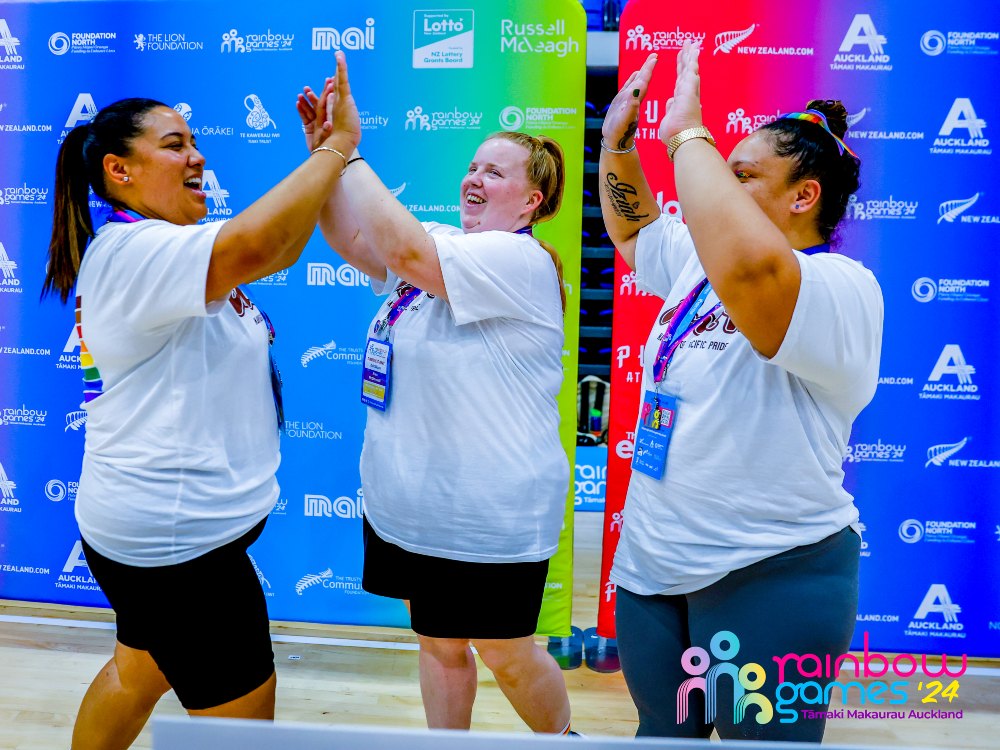
Success, therefore, will not be measured only in goals, medals or tournament results. It will be seen in the people who arrive feeling nervous and leave feeling part of something larger.
Shields knows how intimidating that first step can feel. Her return to netball after 43 years reminded her that walking through the door is often the hardest part.
“Once you’re there, you realise everyone is there for the same reason,” she says. “To have fun, make connections and be part of something bigger than themselves.”
So, whether you are an experienced player, a complete beginner or someone who has not touched a netball in four decades, Moana Vā’s message remains the same: Come anyway.