








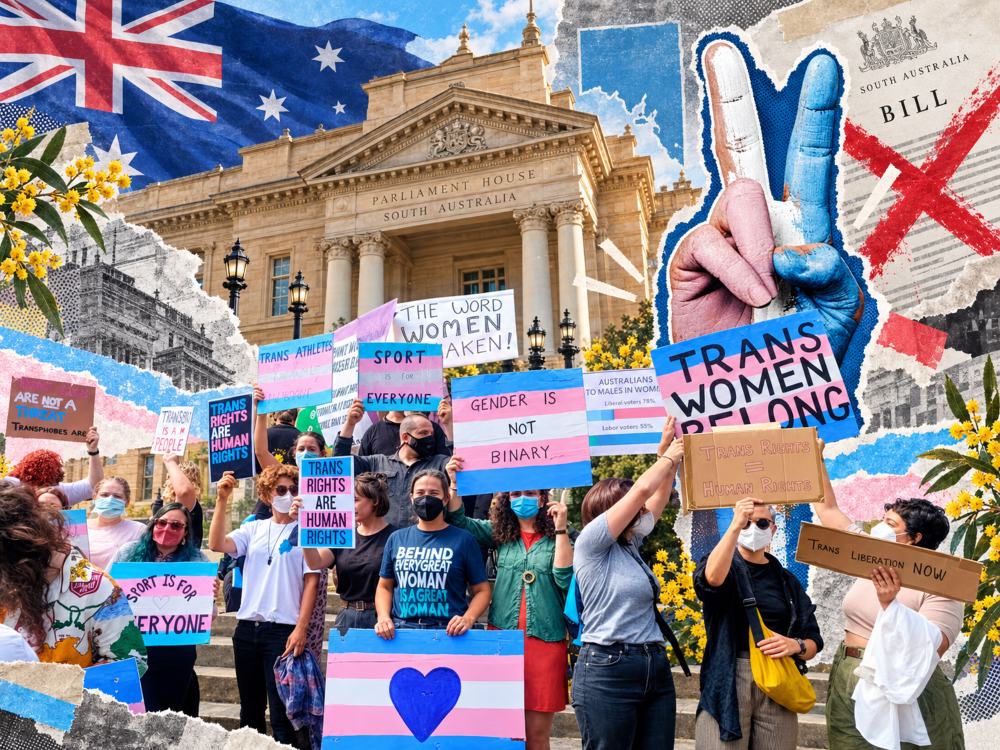
South Australia’s Parliament has rejected a One Nation bill that sought to introduce prison sentences for health practitioners providing certain gender-affirming treatments to people under 18.
The Health Practitioner Regulation National Law (South Australia) (Childhood Gender Dysphoria) Amendment Bill, introduced by One Nation’s Cory Bernardi, was defeated 11 votes to 8 in the Legislative Council.
Had it passed, doctors and other health practitioners could have faced up to five years in prison for prescribing or administering puberty blockers or gender-affirming hormones to minors for the treatment of gender dysphoria.
Labor And Greens Oppose The Bill
The bill was defeated with opposition from Labor and the Greens, while it received support from One Nation, Family First and several Liberal members.
Opponents argued that decisions about healthcare should remain guided by clinical standards, individual assessment and discussions between young people, their families and qualified health professionals.
The vote means South Australia will not introduce criminal penalties targeting practitioners providing this form of healthcare.
Rainbow Advocates Welcome The Result
SA Rainbow Advocacy Alliance welcomed the bill’s defeat, describing it as a win for trans and gender-diverse young people.
“Today’s decision in Parliament is a win for evidence-based healthcare and the wellbeing of trans young people across South Australia,” chief executive Varo Lee said.
The organisation said threatening clinicians with prison could interfere with medical decision-making and create fear around providing care.
It also contrasted South Australia’s position with restrictions introduced in Queensland and the Northern Territory.
Other States Have Restricted Care Without Criminalising It
No Australian state or territory currently imposes prison sentences on health practitioners simply for prescribing puberty blockers or gender-affirming hormones to minors in accordance with lawful clinical practice.
Queensland has, however, stopped new patients in its public health system from beginning puberty blockers or gender-affirming hormones for gender dysphoria, with that pause currently set to remain until at least 2031.
The Northern Territory also says puberty blockers and hormone treatments are not available through its public health system for trans and gender-diverse children and adolescents.
Existing patients in Queensland may continue treatment where clinically indicated.
That makes Bernardi’s proposal significantly different: rather than restricting a public health service, it sought to make specified medical treatment a criminal offence for practitioners.
Debate Over Youth Gender Care Continues
Gender-affirming healthcare for young people remains politically contested in Australia and internationally.
Australian clinical and research organisations supporting gender-affirming care argue that treatment should be individualised and based on careful assessment, clinical expertise and the needs of each young person.
There is also continuing debate within medicine about the quality of evidence for some interventions, particularly long-term outcomes.
South Australia’s vote does not end that discussion.
It does, however, draw a clear distinction between debating clinical standards and threatening healthcare professionals with imprisonment for providing treatment.
Bernardi Has A Long History Of Anti-LGBTQ+ Commentary
Bernardi has been a prominent opponent of LGBTQ+ rights for more than a decade.
In 2012, while a federal Liberal senator, he resigned as parliamentary secretary to then-opposition leader Tony Abbott after arguing that legalising same-sex marriage could lead to demands for other forms of marriage, including relationships involving animals.
He later left the Liberal Party and founded the Australian Conservatives before returning to politics with One Nation.
His latest proposal placed transgender healthcare at the centre of that longstanding social-conservative agenda.
For trans young people and their families in South Australia, the immediate result is simpler: the proposed criminal penalties will not become law.