








Trans rights protesters interrupted the red carpet for a gala performance of Harry Potter and the Cursed Child in London, with one demonstrator wearing a T-shirt reading “Rowling money kills” as the ongoing dispute surrounding JK Rowling and trans rights returned to the West End.
Trans rights protesters disrupted the red carpet outside London’s Palace Theatre ahead of a gala performance of Harry Potter and the Cursed Child.
The demonstration took place on Thursday 15 October as guests arrived to celebrate the newly reworked version of the long-running West End production.
Several protesters, wearing masks and hats that concealed their identities, entered the red carpet and lay down across it before being removed by security.
One demonstrator wore a T-shirt reading “Rowling money kills”, an apparent criticism of Harry Potter author JK Rowling and her involvement in campaigns concerning sex and gender law.
Guests arriving around the time of the protest included Vanessa Feltz, Richard Arnold, Anne Hegerty and Angellica Bell.
Protest group says Harry Potter spending helps fund anti-trans campaigns
Following the demonstration, the Guild of Angry Transsexuals, which said it organised the protest, told Variety that the action was intended to draw attention to the connection it sees between revenue from the Harry Potter franchise and Rowling’s political and legal advocacy.
One protester, identified as Thea, told the publication that the group wanted audiences to understand that spending money on Rowling-linked entertainment can ultimately support causes affecting trans rights.
That is the protesters’ political argument rather than an established claim that purchasing a particular theatre ticket directly finances any specific campaign.
Rowling has publicly funded legal and advocacy efforts focused on what she describes as women’s sex-based rights, and she has become one of the most influential figures in Britain’s debate over the legal recognition of sex and gender identity.
Rowling’s agent responds
Rowling’s agent Neil Blair subsequently criticised the protest.
“We respect peaceful activism and the right to express different views,” he told Variety.
However, he argued that those rights should be exercised without putting theatre-goers, performers or staff at risk, and claimed Thursday’s disruption crossed that line.
Blair said the production remained committed to providing what he described as a welcoming and safe theatrical experience for Harry Potter fans.
No serious injuries were reported in coverage of the demonstration.
Why is JK Rowling the target of trans protests?
Rowling’s position on transgender rights has become increasingly prominent over the past several years.
She argues that biological sex is immutable and that laws and policies should preserve sex-based distinctions in areas including single-sex spaces.
Her own website says she believes that defining gender solely through self-identification can undermine protections for women.
Rowling rejects the description of herself as transphobic and has previously said she supports trans people’s ability to live in ways they find authentic and comfortable.
Trans advocates and LGBTQ+ organisations have nevertheless strongly criticised many of her statements and campaigns, arguing that they contribute to policies that restrict the legal recognition, healthcare and participation of transgender people.
That divide has increasingly followed the Harry Potter franchise itself.
The Palace Theatre has been targeted before
Thursday’s protest was not the first demonstration outside Harry Potter and the Cursed Child this year.
In January, activists covered the pavement outside the Palace Theatre with hundreds of chalk messages, including calls for audiences to boycott Harry Potter.
That action was organised by Defund Transphobes, which argued that audiences should consider how money spent on Rowling-linked properties could contribute to her wider advocacy.
Other demonstrations have taken place around Harry Potter events and locations as some trans activists increasingly target the commercial franchise rather than Rowling’s statements alone.
Why was there a gala?
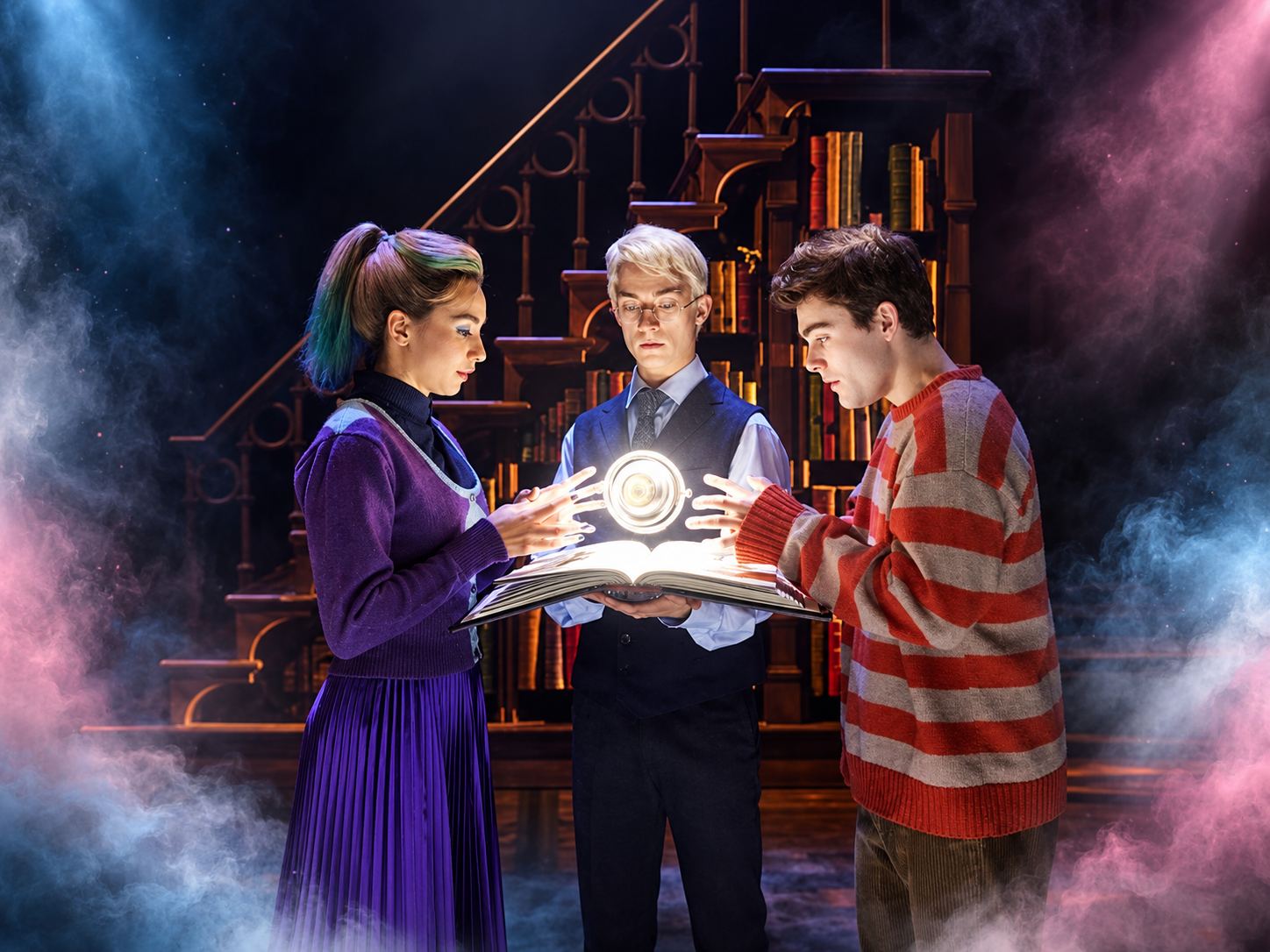
The latest protest coincided with a significant change to the London production of Harry Potter and the Cursed Child.
The play originally premiered at the Palace Theatre in 2016 as an unusually long two-part production, running for more than five hours and requiring audiences to attend two separate performances.
That original London version ended in September after a decade.
The new production tells the story in one performance lasting approximately two hours and 55 minutes, including an interval.
The reimagined version began performances on 9 October 2026.
The play is written by Jack Thorne, based on an original story by Thorne, Rowling and director John Tiffany.
Harry Potter remains caught in the wider debate
For some LGBTQ+ fans, the dispute around Rowling has fundamentally changed their relationship with a franchise they once considered important to their childhoods.
Others continue to separate the books, films and stage productions from the political positions of their creator.
Thursday’s demonstration illustrates how difficult that separation has become.
The protesters deliberately chose a commercial Harry Potter event to make their point, arguing that audiences should think about the wider destination of money generated by Rowling’s work.
Rowling’s representatives, meanwhile, argue that fans and theatre workers should not become targets of disruptive activism.
That argument is unlikely to disappear.
A decade after Cursed Child first opened in London, the production may now be considerably shorter — but the debate surrounding the woman whose fictional world inspired it is showing little sign of shrinking.