









Filmmaker and musician Paloma Schneideman, aka PolyHill, tells Oliver Hall how the internet transformed her teenage years, why growing up queer can leave a lasting mark on our relationships, and how those experiences inspired her acclaimed film Big Girls Don’t Cry.
Remember when the internet first arrived in our bedrooms? Suddenly, we could talk to complete strangers, experiment with new identities and discover worlds that had previously seemed impossibly far away.
For queer teenagers, particularly those growing up in small towns, it offered the possibility of finding people like ourselves without anyone at school knowing.
Filmmaker Paloma Schneideman remembers that moment vividly.
“I was a lonely, isolated kid, and then all of a sudden, at the touch of a button, you’re connected to the world. You can reinvent yourself.”
It was a formative experience for the filmmaker and musician, also known as PolyHill, whose debut feature, Big Girls Don’t Cry, explores adolescence at the dawn of social media.
Set in rural New Zealand during the summer of 2006, the film follows 14-year-old Sid (Ani Palmer), who finds herself caught between childhood and adulthood as she navigates older friendships, emerging sexuality and the possibilities of an increasingly connected world.
Paloma wanted to capture that particular moment when a generation experienced the transition from life before the internet to a world of instant communication.
“We were the first teenage generation to experience that. That will never happen again. Us millennials know life pre- and post-internet.”
Sid’s experiences are partly autobiographical, although Paloma says the character developed into someone quite different through years of scriptwriting and conversations with others.
What remains particularly personal is the film’s depiction of queer longing.
Sid never kisses a girl, and there is no conventional coming-out scene. Her sexuality emerges through her fascination with other girls and her desire for their attention, feelings she cannot yet fully understand.
“I didn’t know that I wanted to necessarily kiss girls, but I knew that I really longed for their attention and their warmth.”
Paloma wanted audiences to experience that uncertainty alongside Sid, without revealing something her protagonist had yet to discover about herself.
“If Sid doesn’t know she’s queer, I’m not going to out her. I don’t want the audience to be privy to any information she’s not.”
For Paloma, adolescence involved concealing her sexuality in an environment where fitting in meant adopting the attitudes of those around her.
“In high school I was essentially performing as a homophobe because that’s what everyone else was doing.”
University brought a different experience. She found her community, made artist friends and became proudly queer, but wonders whether the years spent believing she could never have the relationships she wanted left a lasting mark.
When I ask whether those experiences can affect our adult relationships, Paloma laughs.
“You could ask Wes, my therapist, about it, and they’d probably have something to say.”
Paloma wonders whether growing up believing that certain relationships were forbidden can make healthy relationships feel unfamiliar, or leave people reluctant to commit after spending so many years unable to pursue what they wanted.
“There is a little bit of scarring in the queer psyche. We spent so long being told we weren’t allowed this thing, and now we’re allowed it. Can we give ourselves permission to enjoy it?”
“That’s just my theory.”
These questions about identity and belonging also shape Sid’s relationship with her father, who is navigating his own uncertainties while struggling to understand his daughter.
“You don’t have to be a teenager to come of age. It happens forever, and he’s having his own transitional phase as she is.”
For all the complications of adolescence, Paloma believes there are moments when a parent’s affection can provide something that words cannot.
“Sometimes you can’t fix these things, but what you can get is a hug from a parent, and in that moment, it makes everything okay.”
Paloma originally set out to make Big Girls Don’t Cry for her 14-year-old self, but sharing the finished film with audiences has changed what it means to her.
“My objective shifted from giving myself the catharsis and healing, to being very gratified and moved by giving it to other people as well, people who feel very seen by it.”
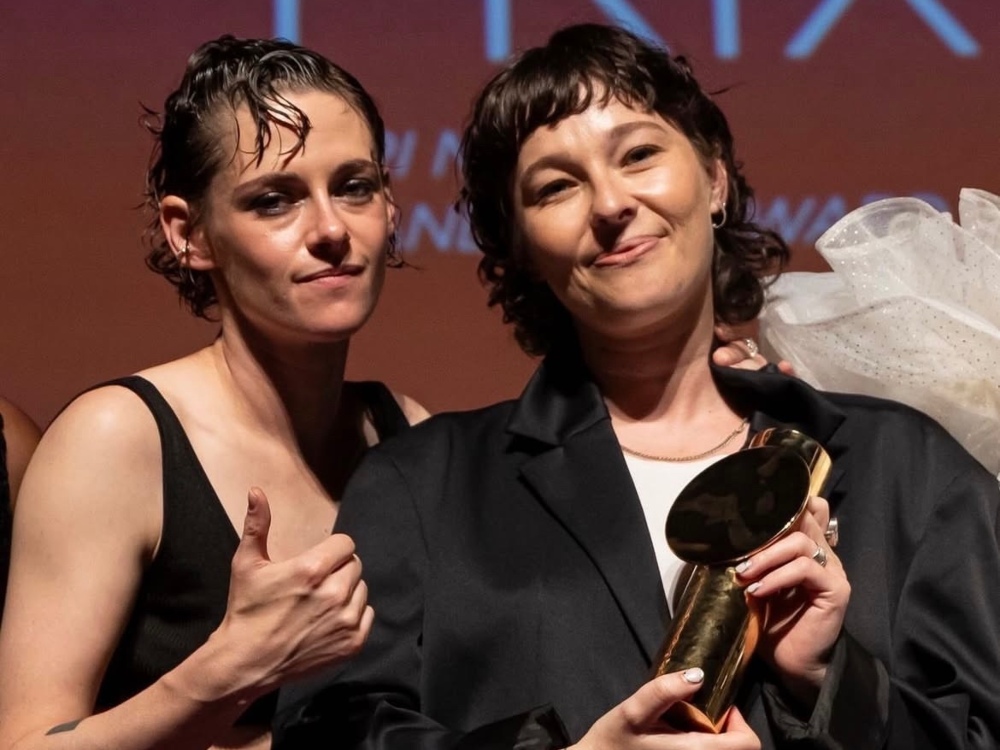
Among those who connected with the film was Kristen Stewart, who chaired the jury that awarded Big Girls Don’t Cry the Grand Prix at France’s Nouvelles Vagues International Film Festival in Biarritz.
For Paloma, hearing Stewart discuss the film was almost as exciting as receiving the award itself.
“When I was listening to her speak, I was like, ‘Oh my God, you understand the film better than I do!’”
And what does an endorsement from Kristen Stewart mean to a queer filmmaker?
“Beyond the very cool social kudos it gave me, it was just nice to be validated by an amazing artist as well.”
Big Girls Don’t Cry opens in New Zealand cinemas on 8 October